


Here is an article which tells you exactly how to unshrink wool.
When wool gets wet and warm, the fibres in the wool lock themselves together and don't want to let go, resulting in shrinkage (you can get wool warm or wet, but not both), which kind of makes washing wool garments a dangerous business.
To un-shrink the wool, soak the garment in warm water with a mild wool friendly soap for about 10 minutes. This unlocks the fibres in the wool. Then lay the garment out on some towels in a cool place. Stretch the garment out to its original dimensions. The stretching pulls the unlocked wool fibres away from each other. Once this is done relax and allow your wool garment to dry. The absence of heat from the drying process allows the wool fibres to set in place without locking together and shrinking the garment again.
Sunday, July 15, 2007
How to Unshrink Clothes (Wool Sweather, etc)
Thursday, July 12, 2007
Free Online Games
Looking for free games to play online? Look no further, play free online games has a great archive of all games that you can play for free online. There's action, board/puzzle, casino, RPG, strategy and many more games. My favourite is their RPG section where they have more than 100 free RPG games to play.
Saturday, July 07, 2007
Three Column Blogger Template
This is by far the best site to download three column blogger template. It has all the blogger templates and it is really easy to install. Most of the sites I've visited have very limited templates or either have problems or makes it very difficult for a beginner to install. Check Webtalks blog out.
Wednesday, June 27, 2007
MarketingFirst Group
David Herlambang's marketing blog. He's got some very interesting and good marketing related posting. http://www.marketingfirst.blogspot.com/
Tuesday, December 20, 2005
The Best Web 2.0 Software of 2005
The Best Web 2.0 Software of 2005
http://web2.wsj2.com/the_best_web_20_software_of_2005.htm
Tuesday, November 22, 2005
Website history
Wanna see how other websites look like in the past? Check out Wayback Machine for an archive of all websites since 1996. This is cool.
Thursday, November 03, 2005
Good Quotes
Good quotes from Brand Autopsy:
- Aspire to Be the Dumbest Person in the Room
- It's Impossible to be Happy Without Momentum
- The Antidote to Fear is Action
- Do What You Are
Tuesday, September 27, 2005
Button Maker
Want to create new buttons for your blog or site? Try these sites out:
http://kalsey.com/tools/buttonmaker/
http://www.gtmcknight.com/buttons/
Monday, August 22, 2005
Quotes
3 quotes that I believe in and have act upon:
"You get what you give"
"The solution to overcome fear is action" - "Inaction breeds doubt and fear. Action breeds confidence and courage. If you want to conquer fear, do not sit home and think about it. Go out and get busy."
“世界上最宽阔的是海洋,比海洋更宽阔的是天空,比天空更宽阔的是人的胸怀。”
6 Hats Thinking by Dr. Edward de Bono
Continuation from my posting in http://www.livejournal.com/users/bryanong/:
White Hat
When you think of white, think of neutral. de Bono has categorized information as a neutral subject. The white hat has to do with data and information.
What information do we have here?
What information is missing?
What information would we like to have?
How are we going to get the information?
When you ask for white hat thinking at a meeting you are asking people to forget about proposals and arguments and to concentrate directly on the information. What information is needed, what is available, and how it can be obtained.
Red Hat
When you think of red, think of fire and passion. The red hat allows people to show their emotions on a subject, their gut feelings. People don't need to justify their statements. It is often important to get feelings out in the open, rather than have people at a meeting have hidden agendas, feelings, or misgivings. The red hat allows these feelings to be expressed, to come out in the open.
This is what I feel about the project...
My instincts tell me this won't work.
I like this, I don't like that. The idea is that these statements are known to be "feelings" and nothing more. Once they are stated, the meeting can move on to a more constructive approach.
Black Hat
When you think of black, think of negative, or caution. The black hat is for critical judgment. It points out what cannot be done. The hope is that the black hat role will prevent us from making mistakes.
Yellow Hat
When you think of yellow, think of the sun and sunny, positive thoughts. The yellow hat role is for discussing ONLY the positive view of problems and solution possibilities. The yellow hat looks for benefits (and feasibility), but must be logically based, not intuitive like the red hat.
We are often better with the black hat. We are good at seeing what won't work, as opposed to what will. Forcing ourselves to look only at the positive aspects can be very valuable, since otherwise we don't always move forward.
Green Hat
When you think of green, think of plants and growth. The green hat is for new ideas, for creativity, for new alternative solutions.
Could this be done in another way?
Might there be another explanation?
Does anyone have another idea? (See brainstorming)
Blue Hat
When you think of blue, think of the sky and an overview. The blue hat is the hardest one to understand. It deals with controlling the thinking process. The blue hat is often "given" to one person, who controls what hat will be "worn", hence controlling the type of thinking being used. The different colours don't always follow in the same order. Depending on the situation, and the mix of people, it might be better to let people get their negative thoughts out first, or their intuitive sense, and then use yellow or green to move ahead. The blue hat comments on the thinking being used, asks for conclusions, decisions, etc. The blue hat can move from person to person, or can be a chairperson.
Source
Thursday, August 11, 2005
Never present a problem without a solution
A posting from Brand autopsy that really makes us think.
Do SomethingOne of the earliest business rules I can recall that made a HUGE difference in my professional style was...
Never present a problem to your boss without having a suggested solution ready. Don't be part of the problem, be part of the solution.In their book, Why People Business People Speak Like Idiots, Fugere, Hardaway & Washawsky take this lesson further. They call it... Do Something.
Here's an excerpt of the passage...
"...Never present a problem without actually doing something that represents a positive step to fix it. Even if it's nothing more than scheduling a trip to visit the disgruntled customer, do something. Show momentum toward and answer, even if you don't know what the answer is. There's a difference between bad news with signs of hope and bad news presented from the deepest pits of despair. You don't want to be the happy messenger, but it's not much better to be the hopeless prophet of doom."
For those passionate professionals wondering how they can position themselves for the next role at their organization this is one of those priceless tips.
For more tips on being better at your job, I highly recommend the book The Unofficial Guide to Power Managing by Alan Weiss. We've mentioned this before on Brand Autopsy... This book is so good you won't want to tell your co-workers you're reading it.
Sunday, July 31, 2005
Digital Point Tools
http://www.digitalpoint.com/tools/
Webmaster tools & Search engine optimisation tools
Thursday, July 14, 2005
Monday, July 04, 2005
The Yes Man
A definitely must watch sites where you see guerrilla media activists, Andy Bichlbaum and Mike Bonnano exposing the evil of corporates and politicians in a very unique funny way. See them impose as WTO, George Bush's website and many other more.
http://www.theyesmen.org/
http://www.rtmark.com/
Wednesday, June 29, 2005
Google Labs
Google labs showcases all their favourite ideas that they are developing as well as those that have graduate out of beta mode:
http://labs.google.com/
Knowledge Management - Systems Thinking
Came across this site today which discusses about knowledge management. It basically talks about in an information and knowledge packed world of today; we need to learn how to effectively manage ourself - we are all manager of ourselves not others. It is not about managing people to do the work but to do these 3 things:
1.) Establishing strategy, setting goals, showing leadership and measuring results rather setting and policing rules for workers.
2.) Less management of people and more about giving them the right goals, the right motivation and the right tools, and clearly articulating how success or failure will be measured.
3.) As a knowledge manager, we should look to our manager for the broad strategic direction and we should look to ourself for the ability to manage our day. We must develop this crucial skill, because if we're waiting to be told what to do... then our job is in serious danger of being automated or outsourced.
There isn't a great future for those who do not rise to the knowledge management challenge. As organizations continue to automate, outsource and offshore, those people who remain will become invaluable to the success of the organization. They will be the knowledge managers.
This is the same as what the term of knowledge is all about as depicted in this site in which it talks about knowledge management:
- Information relates to description, definition, or perspective (what, who, when, where).
- Knowledge comprises strategy, practice, method, or approach (how).
- Wisdom embodies principle, insight, moral, or archetype (why).
The site mentioned above has alot of resources regarding systems thinking as well as other management issues in business and organisations. I think it is a site worth looking at to which we can broaden our thinking and how we see & manage things. Now, this make me start to think, what has knowledge management got to do with systems thinking? Systems thinking is really about see the big picture and understanding that every little thing is part of a bigger system. A function or another will depends on alot more other factors in which it can operate. Just like the body, we all need the different parts of our body in order to operate as a body system. Similar to the organisation and environment which is also a living system: different departments and different environmental elements work together in order to create the system. There is always a cause and effect in any little thing that is done. Just like the butterfly effect, a small action can lead to a big change and results.
In order for creative knowledge management, we need systems thinking to help us look beyond what we are doing everyday. Almost everything that exists within the organisation, environment or body will have its role and something to do with what we are doing. Systems thinking with really help us to achieve the 3 elements of knowledge management. Without systems thinking; we will never be able to attain the wisdom level. As wisdom is the ability to look beyond what we can just see or just touch and all factors that will play a part in a 'systems'.
Tuesday, June 28, 2005
Six Sigma: Measurement of Quality
What is Six Sigma? - The Roadmap to Customer Impact, from GE.com
Globalization and instant access to information, products and services have changed the way our customers conduct business — old business models no longer work. Today's competitive environment leaves no room for error. We must delight our customers and relentlessly look for new ways to exceed their expectations. This is why Six Sigma Quality has become a part of our culture.
What is Six Sigma? First, what it is not. It is not a secret society, a slogan or a cliché. Six Sigma is a highly disciplined process that helps us focus on developing and delivering near-perfect products and services. Why "Sigma"? The word is a statistical term that measures how far a given process deviates from perfection. The central idea behind Six Sigma is that if you can measure how many "defects" you have in a process, you can systematically figure out how to eliminate them and get as close to "zero defects" as possible. Six Sigma has changed the DNA of GE — it is now the way we work — in everything we do and in every product we design.
There are three key elements of quality: customer, process and employee. Everything we do to remain a world-class quality company focuses on these three essential elements.
1....the Customer: Delighting Customers
Customers are the center of GE's universe: they define quality. They expect performance, reliability, competitive prices, on-time delivery, service, clear and correct transaction processing and more. In every attribute that influences customer perception, we know that just being good is not enough. Delighting our customers is a necessity. Because if we don't do it, someone else will!
2...the Process: Outside-In Thinking
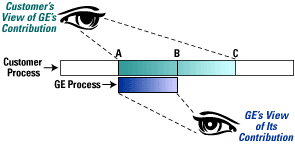
Quality requires us to look at our business from the customer's perspective, not ours. In other words, we must look at our processes from the outside-in. By understanding the transaction lifecycle from the customer's needs and processes, we can discover what they are seeing and feeling. With this knowledge, we can identify areas where we can add significant value or improvement from their perspective.
3...the Employee: Leadership Commitment
People create results. Involving all employees is essential to GE's quality approach. GE is committed to providing opportunities and incentives for employees to focus their talents and energies on satisfying customers.
All GE employees are trained in the strategy, statistical tools and techniques of Six Sigma quality. Training courses are offered at various levels:
- Quality Overview Seminars: basic Six Sigma awareness.
- Team Training: basic tool introduction to equip employees to participate on Six Sigma teams.
- Master Black Belt, Black Belt and Green Belt Training: in-depth quality training that includes high-level statistical tools, basic quality control tools, Change Acceleration Process and Flow technology tools.
- Design for Six Sigma (DFSS) Training: prepares teams for the use of statistical tools to design it right the first time.
Quality is the responsibility of every employee. Every employee must be involved, motivated and knowledgeable if we are to succeed.
From isixsigma: According to the Six Sigma Academy, Black Belts save companies approximately $230,000 per project and can complete four to 6 projects per year. General Electric, one of the most successful companies implementing Six Sigma, has estimated benefits on the order of $10 billion during the first five years of implementation. GE first began Six Sigma in 1995 after Motorola and Allied Signal blazed the Six Sigma trail.
Complexity of Selling
Came upon a blog today: http://www.gapingvoid.com/ and in it, it has a posting from Cardboard spaceship on the complexity of selling:
Understanding the Market
Understanding the Offering
Finding likely customers
Prospecting
Initial discussions
Engagement
Managing the Sales process – External Sale
Managing the Sales process – Internal Sale
Handling the Competition
Qualification
Handling Objections
Demonstrating capabilities
Negotiation
Closing the Sale
Handing over the delivery team
Managing the post sale
Account Management
Extending the footprint
Managing the support and services revenues
This looks like a long list, and it is. Complex selling is exactly that, and the ability to manage this complexity successfully is one of the main reasons that it is a rewarding.
This reminds me of my managing the sales function course that I took last term.
Wednesday, June 22, 2005
Podcast: All about Podcasting
Podcasting, a term derived from a combination of Apple's "iPod" and "broadcasting", is a method of publishing files to the Internet, allowing users to subscribe to a feed and receive new files automatically. It first became popular in late 2004, used largely for audio files. Podcasting is distinct from other types of audio content delivery because of its subscription model, which uses the RSS 2.0 file format. This technique has enabled independent producers to create self-published, syndicated "radio shows", and has given broadcast radio programs a new distribution channel. Users subscribe to podcasts using "podcatching" software (also called "aggregator" software) which periodically checks for and downloads new content. It can then sync the content to the user's portable music player.
How to Podcatch (getting podcasts):
First, you will need to install a Podcast client like iPodder or Doppler.
Getting the feeds:
Second, you will need to get (subscribe) the feeds and add it to the podcast client. Alternatively, you can also immediately download the audio files just by clicking on the audio link (mp3 file etc) on the website/blog and save it to your computer. However, this way you have to do it manually and one at a time. The purpose of getting (subscribing) to these feeds is so that you can automatically download new songs from mutliple sites/blogs from one point (your podcast client). There are many directories out there such as podcaster.net and podcasts.org for you to get feeds of any categories or you can just type 'podcast' in the search engines.
How to make your own podcasts and feeds:
There are millions of ways that you can make podcasts. To look at this really simply; it is just recording your own song/sound and convert it into an audio file such as MP3 or RM. Here is a link that will teach you how to create your own podcasts.
Creating podcast feeds is the same as creating RSS feeds. You can use feedburner to create your podcast feeds or you can create it using audioblog.com. I personally use feedburner as it is really easy to use.
Posting of Podcasts in Blogger:
To post a Podcast-able item within Blogger: 1. Click the Posting tab to begin a new post. 2. If you enabled the Link field, it should now appear below Title on the posting form. 3. Place your Podcast media URL in this field. Be sure to include the http:// protocol part of the URL. 4. Publish your Post. The title of the post will link directly to the item in a web browser. In your FeedBurner feed, the item will link to the original Blogger post, but an
Here are some further information on podcasting:
http://www.rss-specifications.com/podcast-tools.htm
The Long Tail
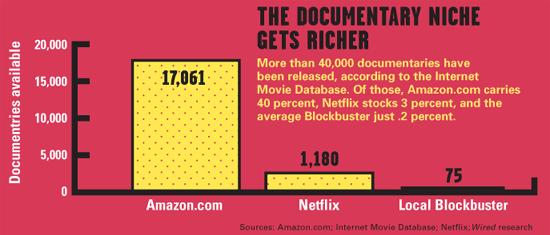
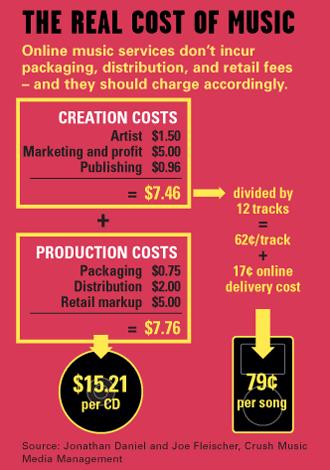
The phrase 'The Long Tail' was first coined by Chris Anderson in a October 2004 Wired Magazine article, describing the effects of the long tail on current and future business models. Anderson observed that products that are in low demand or have low sales volume can collectively make up a market share that rivals or exceeds the relatively few current bestsellers and blockbusters, if the store or distribution channel is large enough. Examples of such mega-stores include Amazon.com, Netflix and even Wikipedia. The Long Tail is a potential market and, as the examples illustrate, successfully tapping in to that long tail market is often enabled by the distribution and sales channel opportunities the Internet creates.
A former Amazon employee described the Long Tail as follows: "We sold more books today that didn't sell at all yesterday than we sold today of all the books that did sell yesterday." In the same sense Wikipedia has many low popularity articles that, collectively, create a higher quantity of demand than a limited number of mainstream articles found on a professional site such as Britannica.



Chris Anderson also has a blog that has more information about long tail.

